

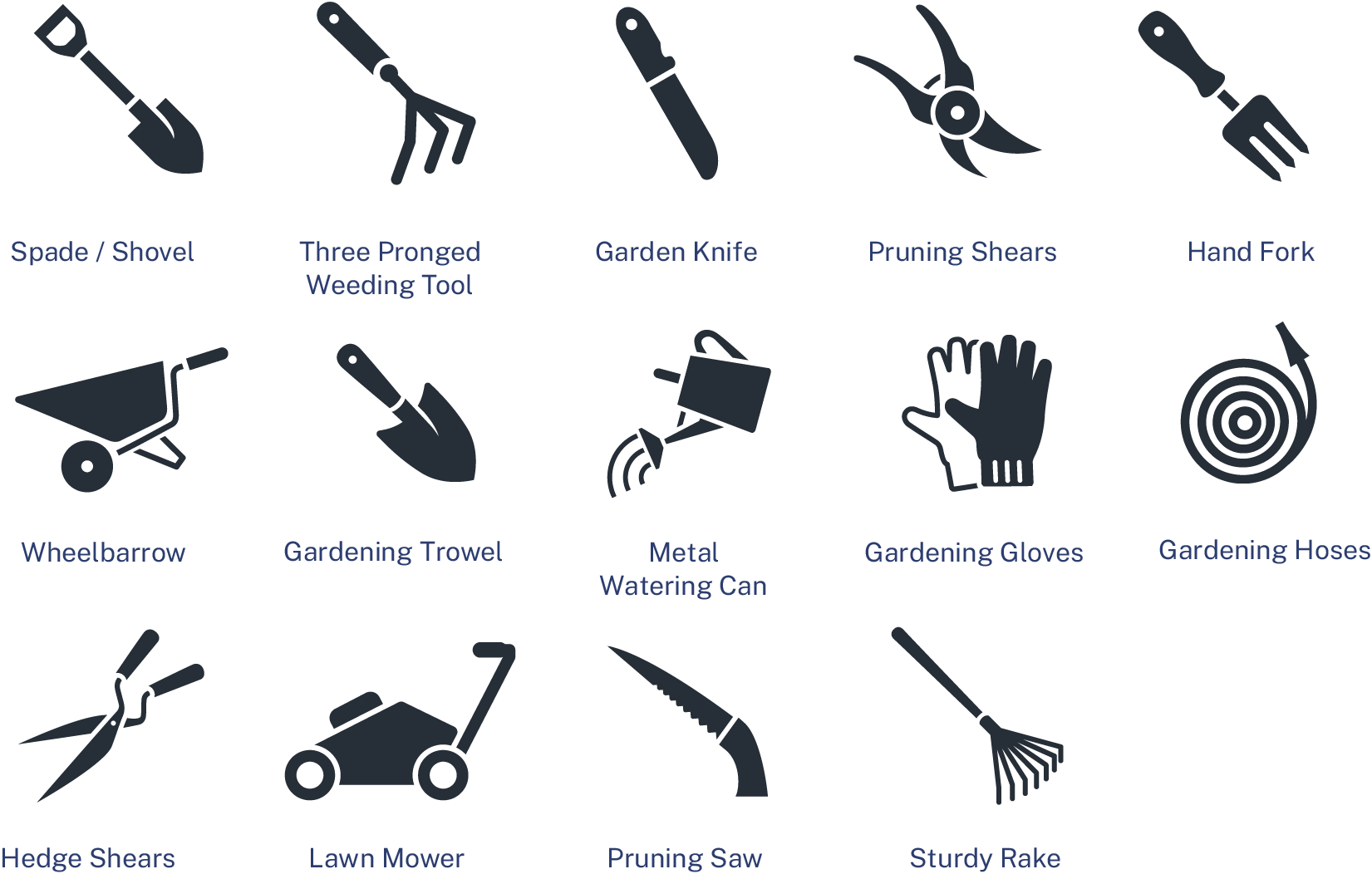
Use these icons to understand what garden tools you will need to keep your garden looking lush all year round.
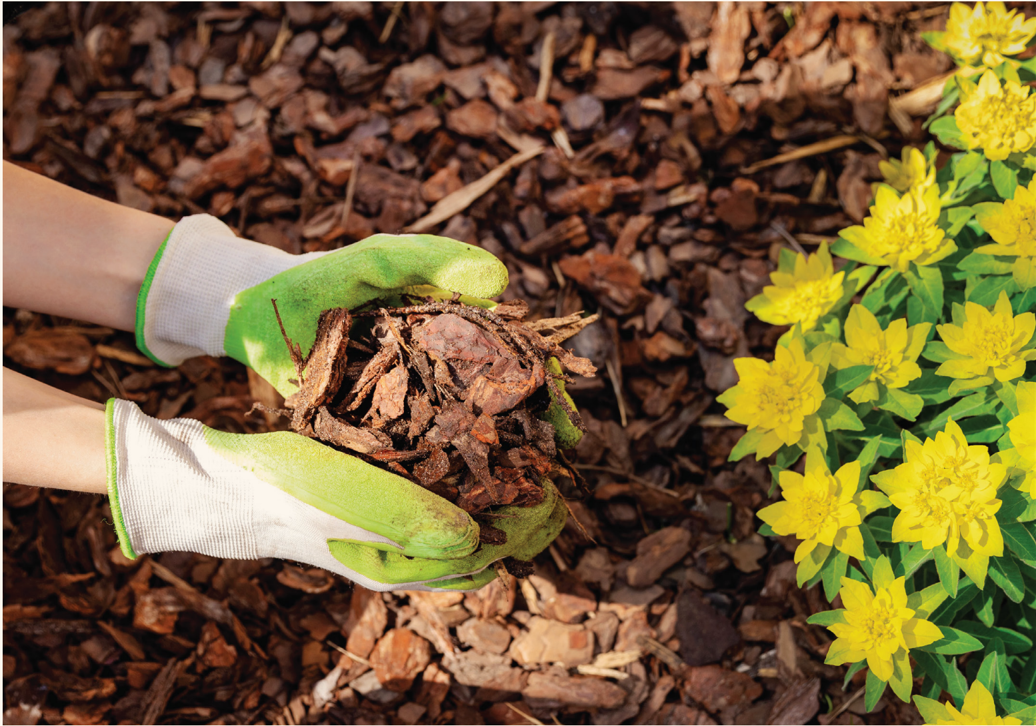
Mulching helps the soil retain moisture, insulates the ground somewhat from heat and cold, assists with weed management, improves garden aesthetics and can help improve the soil.
Mulches are organic or inorganic. Organic mulches will eventually break down. The type of mulch you choose will influence the aesthetic of what you want in your garden.
Organic mulches include: pine bark, wood chips, leaf litter and shredding, sugar cane, lucerne, hay (straw). Sugar cane, lucerne and hay are best suited for use in vegetable gardens, where they will break down in a season and help improve the soil.
Organic mulches are spread evenly about 50mm deep to help ensure water penetration and should be watered before applying the mulch.
Inorganic mulches include river pebbles, crushed rock or brick, brushed quartz and scoria. All are available in various sizes. Inorganic mulches work best in formal gardens and with succulents.
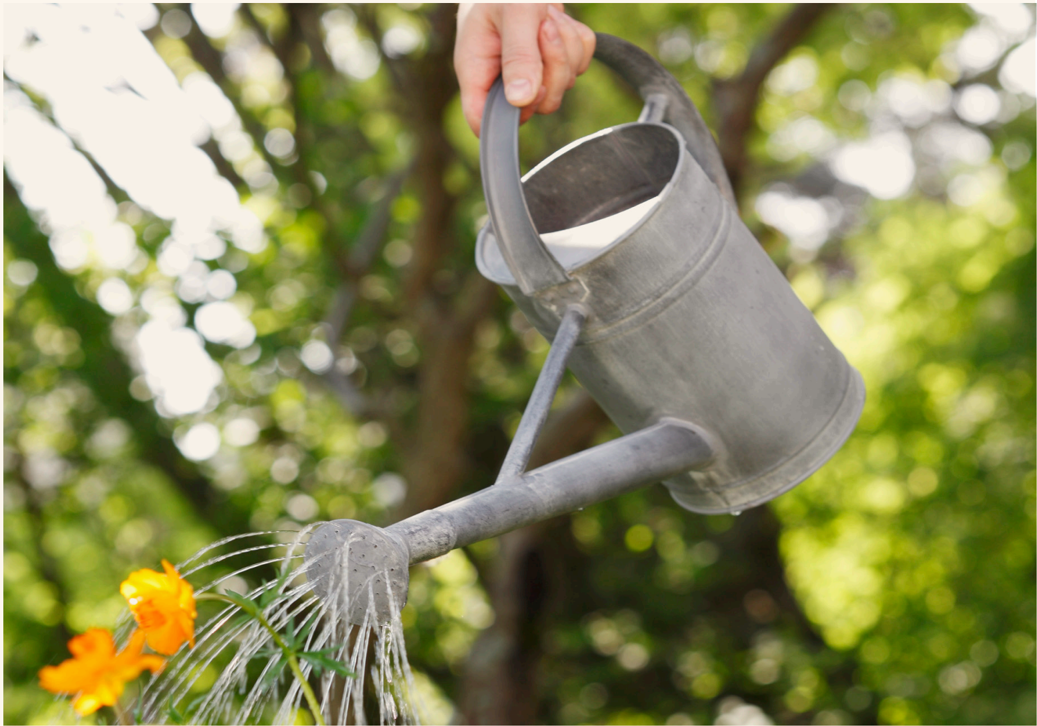
As a general rule: pot plants require a little water more often and in-ground plants a good amount of water less often.
The amount and frequency of watering depends very much on the plants you have selected for your garden. Drought tolerant indigenous plants require watering once a week to establish them over their first and second summers. A succulent garden may only need watering when first planted.
Fruit trees require regular and good deep watering once a week. Plants that have similar watering needs should be grouped together in the garden. Water systems to consider include drippers and soaker hoses. Water to the base of the plant around the canopy of drip-line to maximise uptake of water. It is encouraged to water early in the morning and late in the afternoon, particularly in the summer months, for the most effective use of water.

Depending on your type of lawn, you should be mowing your grass every 1-2 weeks during summer and 2-3 weeks during winter.
The height should be kept between 40-75mm, dependent upon the grass species (upright growing lawns should be left slightly longer than creeping species – such as Kikuyu or Buffalo). Lawn clippings can be captured in a catcher and composted for application into garden beds at a later date.
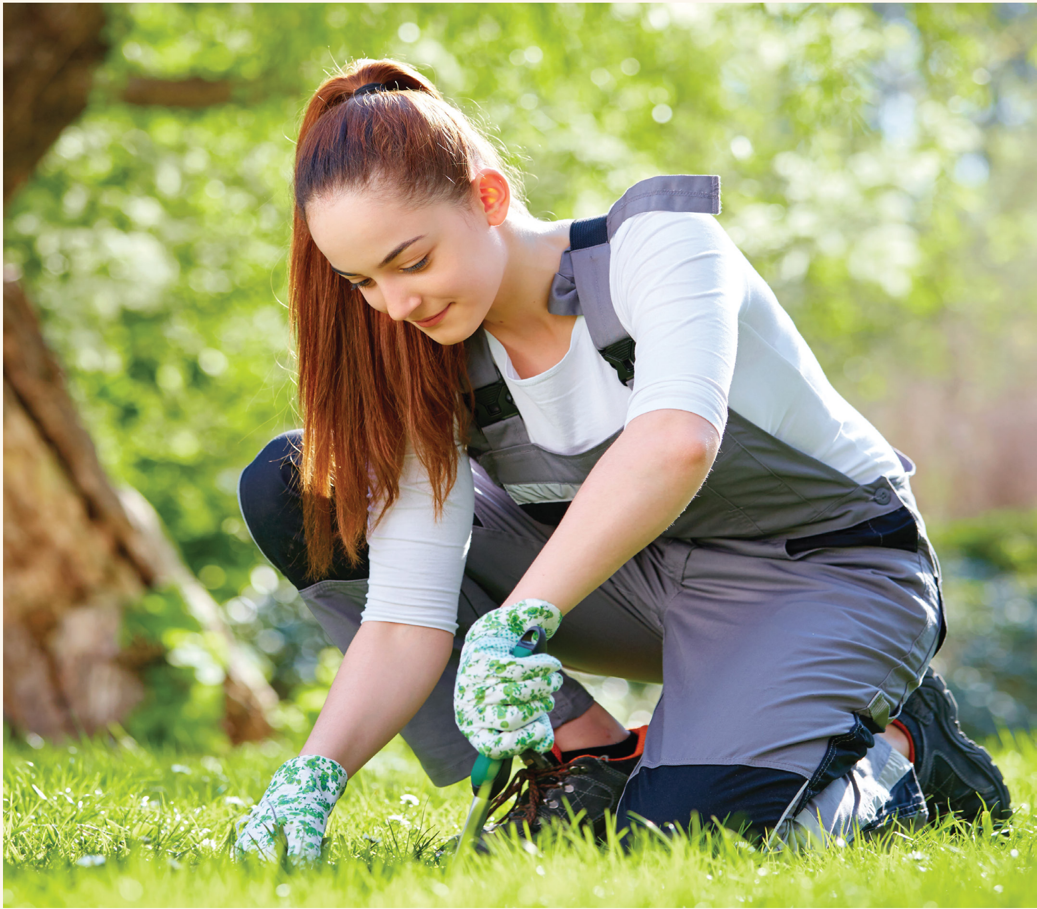
Let a weed go to seed and endure seven years or more of weeds! The best time to remove a weed is as soon as you see it.
Mulching can assist with weed control.
Hand weeding is preferred but there are some instances where using herbicide could be the only solution to a weed problem. If you choose to use a herbicide, ensure you follow the instructions, use the recommended dose and wear the appropriate protective clothing. If you must use herbicides, choose those that are rated as animal friendly.
Boiling water can be used on weeds, especially those that are difficult to remove. There are a number of environmentally friendly weed killers that use vinegar or pine oil.
Weed mats should be avoided as they can have negative impacts on soil condition including creating an anaerobic environment (oxygen starved) hampering desired vegetation growth.
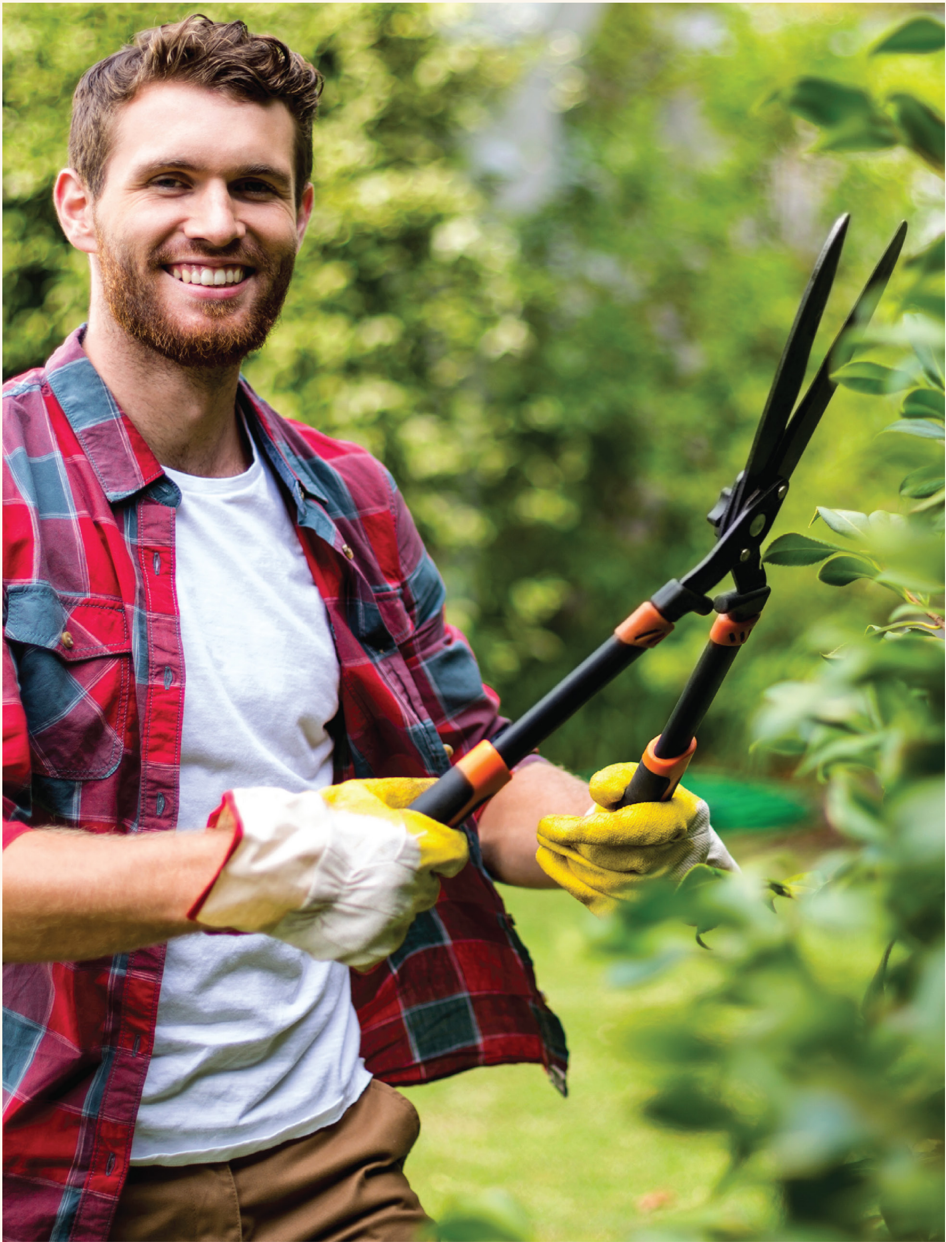
Plants benefit and look better with correct pruning.
Start with good quality tools. In your kit you should have some sharp by-pass hand pruning shears, a pair of loppers and a pruning saw. It can take confidence to develop a good pruning technique, but don’t be daunted as pruning is an essential and rewarding garden skill.
If you are trying to encourage new healthy growth you may prune to restrict the growth of the plant and keep it to manageable size in your garden.
Types of pruning: Tip pruning, thinning and dead heading.
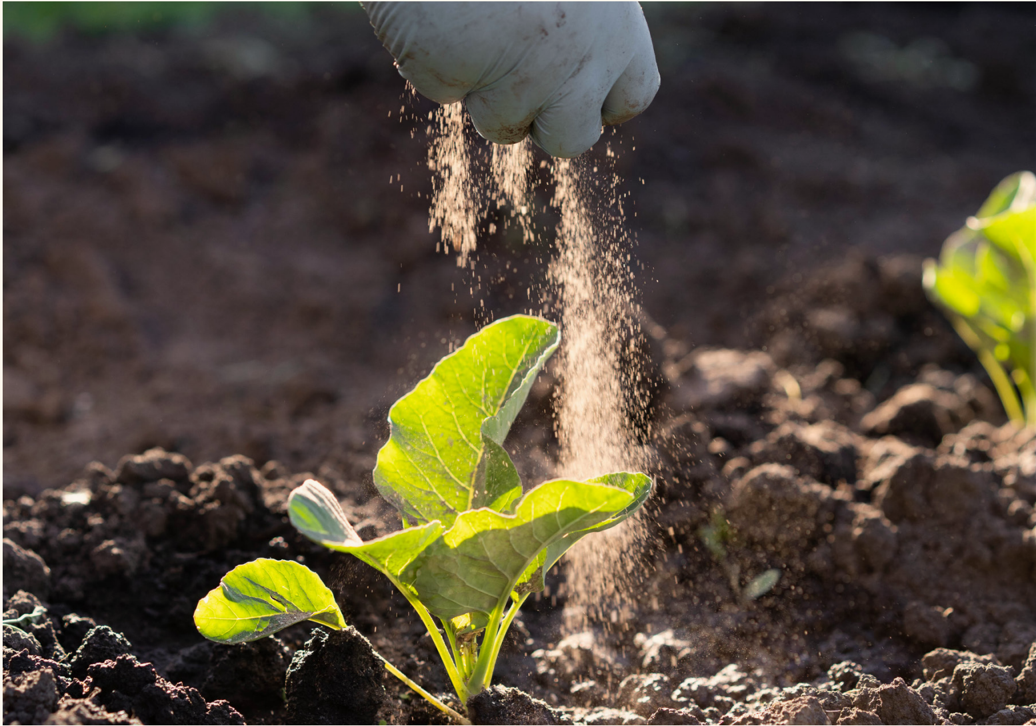
To be their best, all plants require fertilising at the right time, using the correct fertiliser and with the recommended amount.
Fertiliser can be organic or inorganic. Organic fertilisers include manures, pelletised chicken manure, seaweed or fish products.
Organic fertilisers increase worm and good bacterial activity and produce humus which improves the soil health.
Inorganic fertilisers usually come in a packet with a spoon. They may be in powder form to dissolve in water or as granules to scatter. Inorganic fertilisers deliver nutrients to the plants faster than organic fertilisers but you can burn plant foliage using inorganic fertilisers, so follow the instructions and dosage recommendation.